Hotter summers and longer periods of high temperatures are becoming an increasingly important consideration in the design of senior living environments. For older adults in particular, prolonged heat can have a significant impact on health and wellbeing.
At our project on Minnesängerstraße, climate resilience is therefore part of the design from the outset. Building technology, landscaping and daily operations all contribute to creating a comfortable living environment, not only today, but for the years ahead.
Keeping the heat outside
The building is being developed in line with the EH 40 EE energy efficiency standard, combining a highly insulated building envelope with modern and energy-efficient building technology.
This approach helps limit heat entering the building during warmer periods while maintaining a stable and comfortable indoor climate throughout the year.
Solar-control glazing in living and sleeping areas reduces solar heat gain, while electrically controlled external aluminium blinds provide additional protection in particularly exposed areas such as the café, lobby and entrance.
Green spaces that make a difference
Climate resilience continues beyond the building itself.
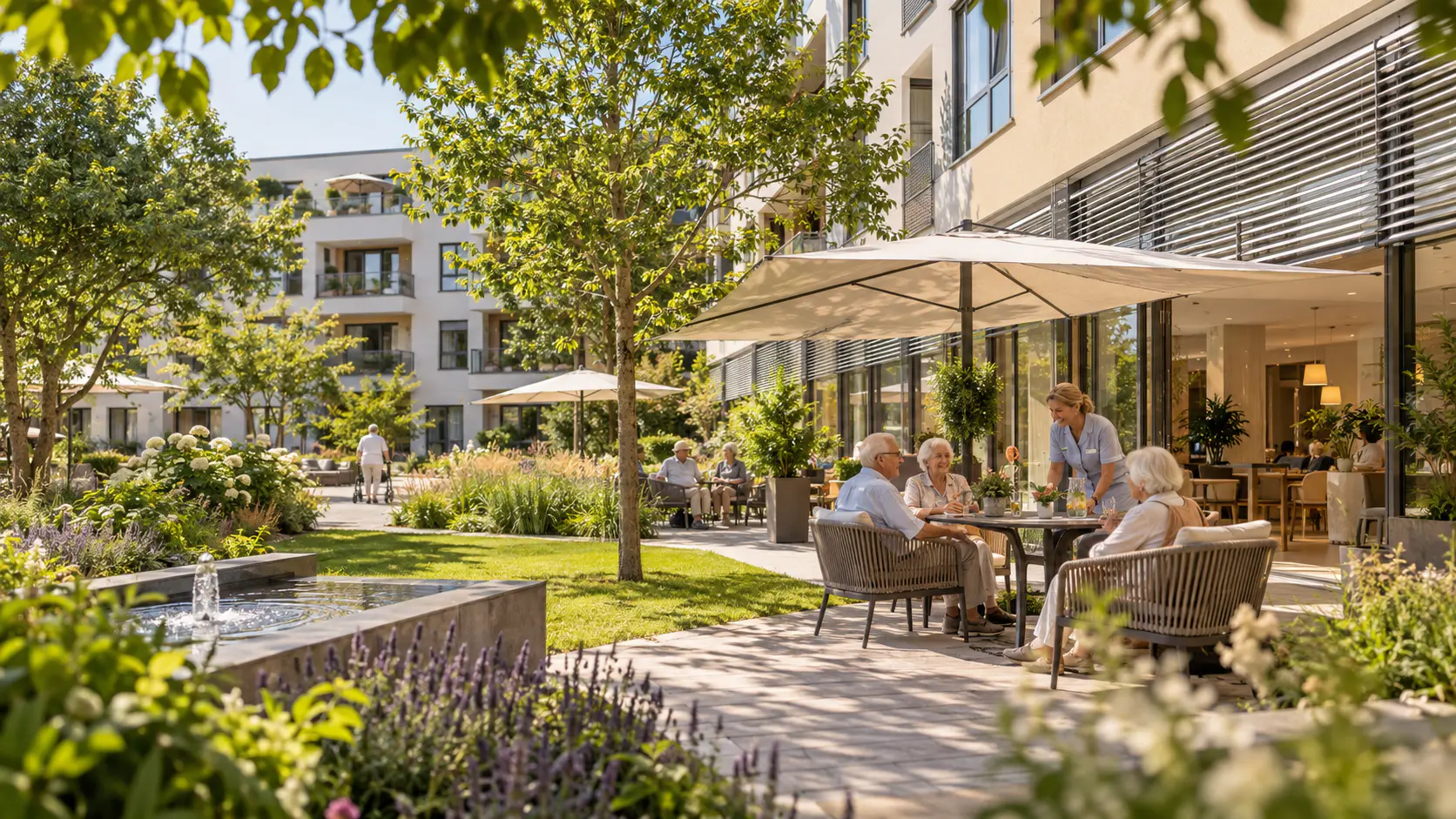
Previously paved areas will be replaced by lawns, trees and vegetation, helping to reduce heat accumulation around the property. The outdoor areas are designed with shaded places where residents can spend time comfortably, even during warmer days.
Large sections of the roof will also be extensively greened. These green roofs retain rainwater and support natural cooling through evaporation, while reducing the extent to which roof surfaces heat up.
Together, these measures contribute to a cooler and more pleasant microclimate around the building.
Geothermal energy for heating and cooling
The project will use geothermal energy through borehole heat exchangers combined with a brine-to-water heat pump.
In winter, the system contributes to efficient heating. During summer, the underfloor system can also be used for gentle cooling, helping maintain comfortable indoor temperatures without relying solely on conventional air conditioning.
Cooling the building naturally
Ventilation also plays an important role.
Controlled residential ventilation provides a continuous supply of fresh air, while a dedicated night-cooling strategy uses the cooler nighttime temperatures to help reduce indoor temperatures before the next day begins.
It is a combination of measures rather than a single technical solution: insulation, shading, greenery, geothermal energy and ventilation all work together.
Beyond the building: everyday heat protection with Humanika
A climate-resilient building provides the foundation, but the wellbeing of residents also depends on how the building is used every day.
Our experienced operator Humanika will complement the technical measures with practical routines during periods of high temperatures.
Shaded outdoor seating areas will allow residents to continue spending time outside safely and comfortably. Accessible hydration points and refreshing drinks will help encourage regular fluid intake, while meals can be adapted to include lighter and water-rich options such as fruit, vegetables and chilled dishes.
Daily routines can also respond to the weather. More physically demanding activities can be scheduled during the cooler morning hours, while staff will actively manage shading and ventilation throughout the day.
Building with the future in mind
Climate change is influencing how buildings need to perform, particularly when they are designed for older generations.
At Minnesängerstraße, our approach is to address this from several perspectives at once: energy-efficient construction, climate-adapted landscaping, intelligent building technology and thoughtful daily care.
The result is a living environment designed to remain comfortable, efficient and resilient as conditions continue to change.